
AFF 2026 Don Dunstan Award
Festival Info
AFF 2026 Don Dunstan Award
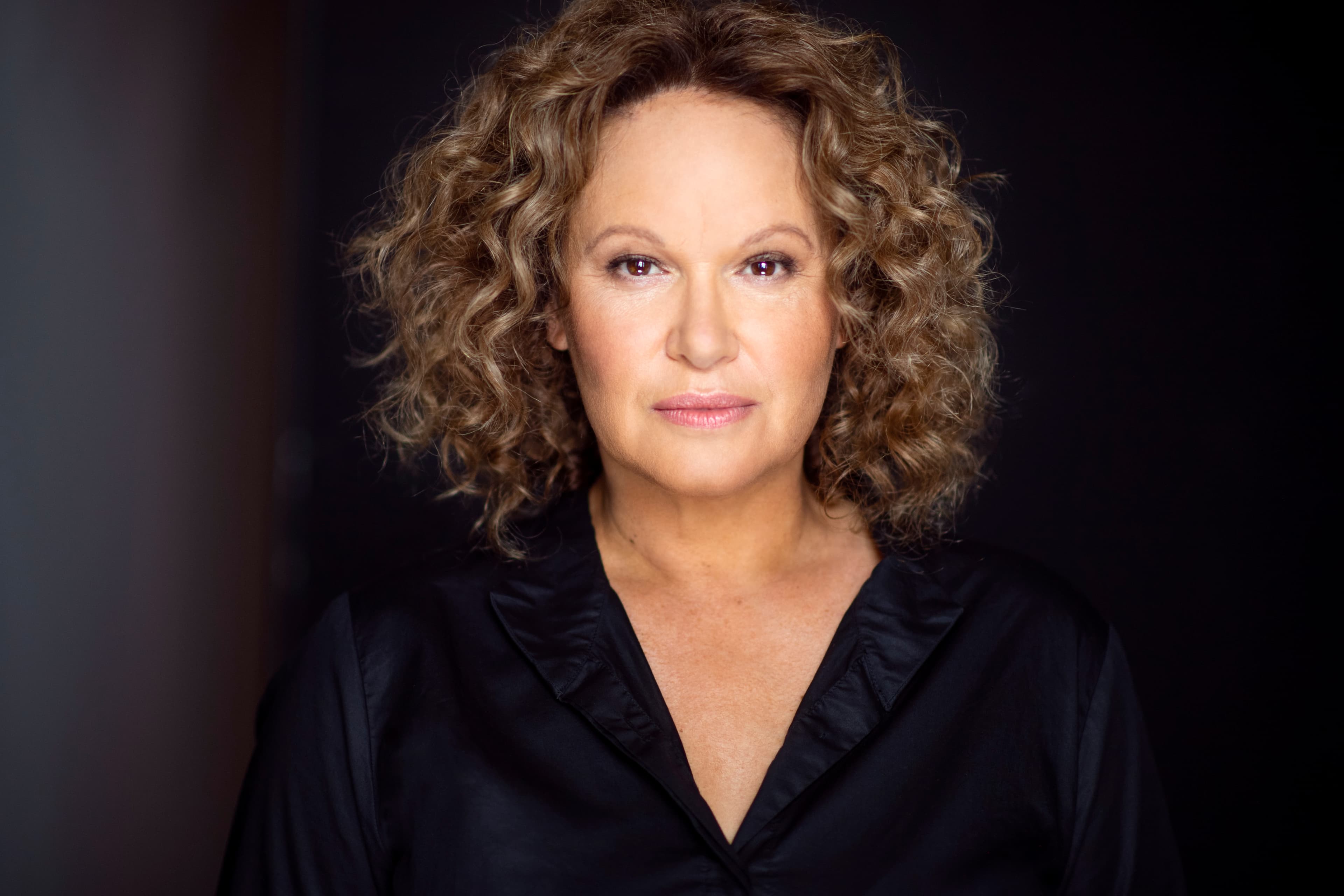
AFF's 2026 Don Dunstan Award recipient is internationally acclaimed actor, writer and director Leah Purcell AM.
A proud Goa-Gunggari-Wakka Wakka Murri woman from Queensland, Leah’s debut feature film as a writer, director, producer and lead actor The Drover’s Wife The Legend of Molly Johnson premiered at SXSW 2021. Her adaptation of The Drovers Wife – The Opera premiered at QPAC Brisbane in 2025 followed by a season at the Sydney Opera House in August 2026.
As one of Australia’s most in demand actors, Leah has appeared in films such as The Last Cab to Darwin (2015), Lantana (2001), Jindabyne (2006) and The Proposition (2005) and in TV series Wentworth (2018-2021), Police Rescue (1996), Redfern Now (2012-2013), Janet King (2016), The Lost Flowers of Alice Hart (2023) and High Country (2023-2024).
An extraordinary voice in any medium, Leah Purcell refuses to work within anyone else’s limits. In a specially commissioned essay, Andrew Bovell reflects on the significance of her voice as an artist and cultural leader.
The Grace and Grit of Leah PurcellEssay
By Andrew Bovell
I first met Leah when Ray Lawrence cast her as Detective Claudia Weiss in the film Lantana. She took a relatively small role and through the warmth and wit of her performance, turned it into something much bigger. One of the most enduring images of the film for me occurs in its epilogue, when she looks up from a bowl of soup in a Vietnamese restaurant and her face breaks into a smile upon seeing the man she has been interested in but too shy to talk to, standing there. A simple moment made memorable by a great actor. The next time I worked with her was in London, when she was cast in When the Rain Stops Falling at the Almeida Theatre in 2009. She injured her ankle in rehearsal and despite enduring severe discomfort, performed the role in a moon boot. The grace of that smile and the grit of that performance epitomise the woman and are qualities that have shaped her extraordinary career.
Leah Purcell is one of the most significant and versatile artists working in contemporary Australian culture. An actor, playwright, screenwriter, novelist, director and producer she has built a career distinguished not simply by its breadth but by the consistency of its artistic purpose and her refusal to be limited to any single role. Across multiple mediums she has returned to questions of identity, family, history, violence, survival and belonging. A proud Goa, Gungarri and Wakka Wakka Murri woman from Queensland, she has been a powerful force in bringing First Nations perspectives into the centre of Australian story telling.
Leah came to national prominence with her one woman show Box the Pony (co-written with Scott Rankin) in 1999. Along with Ningali Lawford-Wolfe’s earlier work Ningali she carved out a space for others to follow, in which First Nations women have told their stories in their own voices. The work established several of the themes that would continue throughout her career: the strength of women, the importance of family history, humour as a means of survival, and the complicated relationship between personal identity and the wider history of Australia.
The significance of Box the Pony lies partly in the way it established her distinctive voice. Her writing is grounded in lived experience. Even when dealing with difficult subjects, it makes room for humour, warmth and contradiction. Her characters are shaped by families, communities and histories, capable of toughness and vulnerability in equal measure. She understands that the most effective political storytelling often begins with the particularities of individual lives.
She followed this initial success with her documentary Black Chicks Talking, which brought together interviews with nine First Nations women and was subsequently adapted into a book and stage production. The project demonstrated her continued interest in creating spaces in which Indigenous women could speak for themselves rather than being interpreted through the perspectives of others.
This concern with voice and agency is central to her importance. Much Australian cultural history has been shaped by stories in which Indigenous people, and particularly Indigenous women, have been marginalised, stereotyped or excluded altogether. Leah’s work challenges this absence not simply by inserting Indigenous characters into familiar narratives but by changing the point from which stories are told. Her work asks audiences to reconsider whose perspective has traditionally been regarded as central and whose experiences have been treated as peripheral.
The most ambitious and celebrated example of this process is her extraordinary reimagining of Henry Lawson's The Drover's Wife. Lawson's original 1892 short story is a foundational work of Australian literature, telling of a woman isolated in the bush while her husband is away. Leah recognised both the power of the original story and the possibilities created by its silences. Her adaptation gives Lawson's unnamed wife an identity and name - Molly Johnson - and dramatically expands the world around her.
Leah’s version transforms the story into something much larger than an adaptation. It becomes an interrogation of Australian national mythology. Her Molly Johnson is not simply a heroic pioneer woman confronting the hardships of the bush. She is a woman with a history, a family and a secret identity, living within a colonial society structured by racism and violence. Through the character of Yadaka and the revelation of Molly's own family history, she brings Indigenous experience into a narrative from which it had largely been absent.
Her stage version of The Drover's Wife was a major critical success, winning the 2017 Victorian Prize for Literature and the Nick Enright Prize for Playwriting, among other honours but its importance lies beyond its awards. The play demonstrated her ability to engage directly with the Australian canon without being intimidated by it. Rather than rejecting Lawson's story, she enters into a conversation with it. She preserves the emotional and mythic power of the isolated woman in the bush while exposing the historical assumptions upon which that national image was constructed.
Leah understands that Australian stories are not fixed monuments but living narratives that can be reconsidered by successive generations. She subsequently transformed The Drover's Wife into a novel, further demonstrating her fascination with the possibilities of adaptation. The novel allowed her to explore interiority and history in ways that theatre could not. The book confronts race, gender, violence and inheritance while expanding the psychological and historical dimensions of Molly Johnson's world.
The story's next transformation was perhaps Leah's most ambitious, her feature film The Drover's Wife: The Legend of Molly Johnson. She wrote, directed, produced and starred in the film, taking an extraordinary degree of creative responsibility for the work. The film deliberately draws on the conventions of the thriller and western as well as historical drama, demonstrating an understanding of genre as a powerful means of reaching audiences.
As a director, her work is emotionally direct, visually conscious and strongly grounded in character. She is interested in dramatic tension and narrative momentum, but she also understands the importance of landscape. In The Drover's Wife, the Australian environment is not merely a picturesque background. It is a force that shapes the lives of the characters and carries the weight of history.
Her decision to work within the conventions of the western is particularly significant. The western has traditionally been associated with myths of frontier expansion, masculine heroism and colonial conquest. Leah takes the genre and redirects it. Her protagonist is a woman; Indigenous experience is central rather than peripheral, and the frontier is revealed as a place not only of adventure but of racial and gendered violence. In doing so, she demonstrates how genre itself can be reclaimed and rewritten.
Her direction is also strengthened by her experience as an actor. She has had a substantial acting career in theatre, film and television, appearing in works including Lantana, The Proposition, Jindabyne, Redfern Now, Wentworth, High Country and The Lost Flowers of Alice Hart. This experience has perhaps, given her a close understanding of what actors require from a script, how character is communicated through gesture and silence, and how emotional truth can be sustained within a highly structured production.
Leah has also become an important theatre director. Her directing credits include Brothers Wreck, Don't Take Your Love to Town, Stolen, The Story of the Miracles at Cookie's Table, Radiance and The 7 Stages of Grieving. Her work in the theatre demonstrates an ongoing commitment to First Nations storytelling and to the development of Australian work. She is not solely concerned with creating a body of work for herself but has participated in the wider cultural project of ensuring that Indigenous stories and artists occupy a central place within Australian theatre.
In 2026, Leah extended her long engagement with The Drover's Wife into yet another form by directing an operatic adaptation. Developed with composer George Palmer, the opera represents the latest stage in a remarkable creative journey that has taken the story from Lawson's nineteenth-century short fiction through theatre, fiction and cinema and into music theatre.
The opera is significant because it confirms that her artistic project remains dynamic. She has not treated her earlier success as something to repeat mechanically. Instead, she continues to test how the same central narrative can acquire different meanings when placed in a new artistic form. Opera offers her the possibility of greater scale, music, ritual and spirituality—dimensions that can expand the relationship between individual character and collective memory.
Ultimately, Leah’s importance lies in her ability to combine artistic ambition with cultural purpose. Her work is engaged with some of the most difficult questions in Australian history, colonisation, racism, violence and exclusion and but it is never reducible to political argument. Her stories are alive with character, humour, suspense, love and conflict. She understands that audiences are moved by people before they are persuaded by ideas.
As both writer and director, Leah has shown that Australian stories can be revisited, challenged and transformed. Her career demonstrates that the national canon is not closed. Stories once considered definitive can be opened again and viewed from another perspective. In doing so, she has expanded the representation of First Nations experience and helped reshape the imaginative landscape of Australian theatre and film.
Leah Purcell is more than a successful multidisciplinary artist. She is a major cultural storyteller whose work has changed the way Australian history and identity can be represented. From the intimate personal storytelling of Box the Pony to the epic reinvention of The Drover's Wife, her career has been driven by a belief in the power of stories to recover silenced histories and create new possibilities for the future. Her achievement as both a writer and director is to make those stories not only important, but compelling, entertaining and deeply human. She has achieved all of this with pure grace and extraordinary grit and is a worthy recipient of the Don Dunstan Award.